Short answers
Do Cleveland homes need a water softener or reverse osmosis?
Choose a softener for scale, spotting, soap performance, and hard-water feel. Choose reverse osmosis for drinking and cooking water at one tap. Some Cleveland-area homes benefit from both, especially when the family wants whole-home comfort plus better kitchen water.
What is the simplest way to decide?
Start with the symptom. White spots, shower scale, and poor lather point toward softening. Taste, ice, coffee, and cooking water point toward reverse osmosis or another drinking-water system.
Can both be installed together?
Yes. A softener can handle whole-home hardness while reverse osmosis handles a dedicated drinking-water tap. That pairing only makes sense when both goals are real.
What to know first
- A softener is not a drinking-water filter.
- Reverse osmosis is not a whole-home softener.
- Cleveland's published hardness number helps explain why scale may show up.
- The best recommendation starts with symptoms, water use, and installation fit.
Compare the practical options
| What you notice | Likely starting point | Why | What to check before buying |
|---|---|---|---|
| White spots on fixtures | Water softener | This is commonly a hardness symptom | Hardness, household use, system size |
| Scale in shower or kettle | Water softener | Mineral buildup points toward hardness | Whether the issue appears throughout the home |
| Dry-feeling skin or poor lather | Water softener | Hardness can affect soap performance | Bathing and laundry complaints |
| Chlorine taste | Carbon filtration or RO | Taste and odor are not softener jobs | Whether the issue is one tap or the whole home |
| Better coffee, ice, or cooking water | Reverse osmosis | This is a point-of-use drinking-water goal | Cabinet space, faucet fit, maintenance |
| Specific contaminant concern | Certified drinking-water system | The claim must match the product certification | Test result and certified reduction claim |
| Whole-house water comfort | Combined whole-home plan | More than one problem may need more than one stage | Softening, filtration, RO, and maintenance needs |
Cleveland hardness context
Cleveland Water reports hardness around 7 grains per gallon, or 120 mg/L as calcium carbonate. USGS places 61 to 120 mg/L in the moderately hard range and hard water at 121 mg/L and above.
That number does not mean the water is unsafe. It does explain why homeowners near the top of the moderately hard range may still notice scale, spots, and soap-performance issues. The number is a starting point, not a complete diagnosis for every home.
What a water softener does
A softener reduces hardness minerals such as calcium and magnesium. That can help with scale, spotting, soap lather, laundry feel, and buildup around water-using appliances.
It does not make water safer by itself. It also does not replace a drinking-water filter. That distinction keeps the recommendation honest and helps homeowners avoid buying the right product for the wrong problem.
What reverse osmosis does
Reverse osmosis is usually installed under the kitchen sink for drinking and cooking water. It is about the tap people use for glasses, coffee, ice, and food preparation.
RO can reduce certain substances when the exact system is certified for those claims. It should not be described as a whole-home softener, and it should not be used as a blanket contaminant-removal claim. Maintenance and certification both matter.
When both make sense
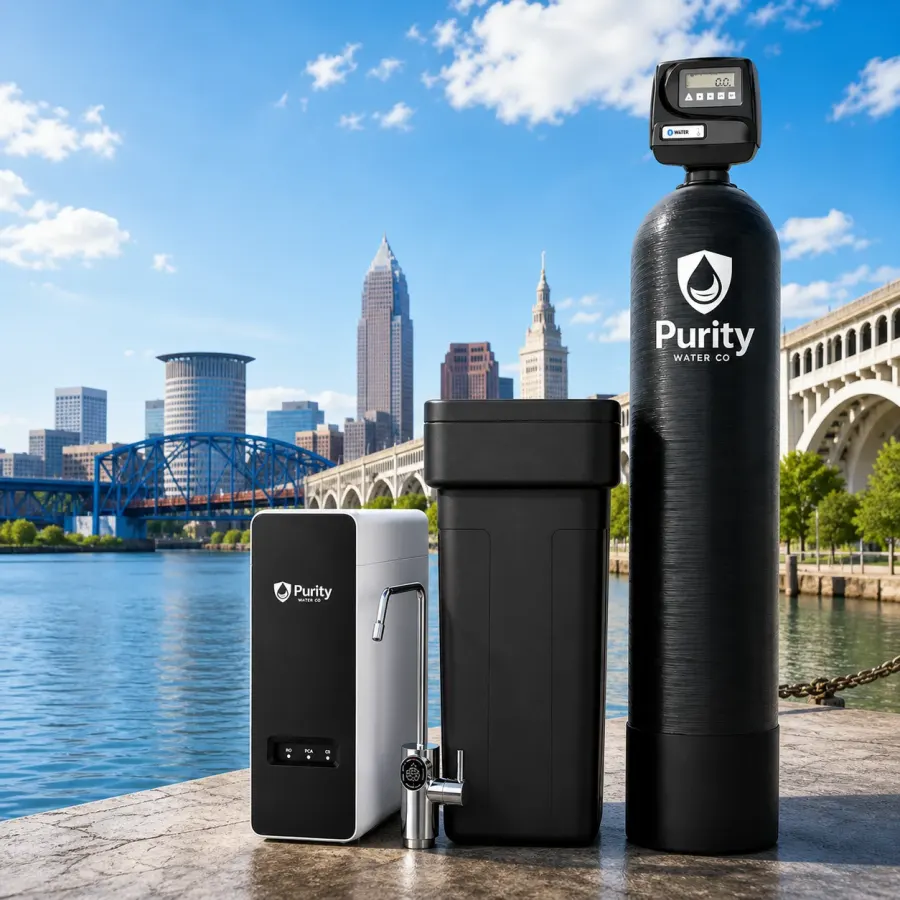
Both systems make sense when the home has two clear goals: whole-home hardness control and better water at the kitchen sink. The softener handles scale and comfort. RO handles the drinking-water tap.
This pairing is common because homeowners often notice more than one water issue. It still needs to be explained component by component so the buyer understands why both are being recommended and what each one will require over time.
When neither should be the first purchase
If the symptom is unclear, testing or a simpler investigation may be better than buying equipment. A single faucet problem could be a fixture issue. Older plumbing concerns may call for water testing or a plumbing review before treatment equipment is selected.
The most useful recommendation is sometimes to slow down and identify the real issue. That is more trustworthy than forcing every question into a product category.
Maintenance and ownership expectations
Softeners need salt and settings that match household demand. RO systems need filter changes, membrane maintenance, and enough access under the sink. A combined system has both responsibilities.
A homeowner should know those responsibilities before choosing. Clear maintenance expectations are part of what separates a serious recommendation from a sales pitch.
Start here
Mostly scale and cleanup
Start with the water softener conversation.
Mostly drinking water
Start with reverse osmosis or another drinking-water option.
Both house-wide comfort and drinking water
Compare a combined whole-home setup.
Helpful next steps
Best water filter for Cleveland tap water
Use this page next if that is the concern you want to compare before requesting a quote.
Whole-home softener and RO package
Use this page next if that is the concern you want to compare before requesting a quote.
Reverse osmosis drinking-water system
Use this page next if that is the concern you want to compare before requesting a quote.
Hard water in Avon Lake
Use this page next if that is the concern you want to compare before requesting a quote.
Hard water in Westlake
Use this page next if that is the concern you want to compare before requesting a quote.
Request a practical recommendation
Use this page next if that is the concern you want to compare before requesting a quote.
Sources used for water-quality context
These sources are used for public water context and treatment-category guidance. They do not replace testing at a specific home.
How to use this before requesting a quote
The best next step is to name the problem in normal household language. Do not start with the product if you are not sure. Start with what you see, taste, smell, clean, replace, or avoid. Scale on shower glass, spots on dishes, chlorine taste in coffee, bottled-water habits, rough laundry, and one odd faucet all point to different conversations.
That context helps Purity avoid guessing. A useful quote conversation should connect the symptom to the treatment location, explain why one system fits better than another, and make the maintenance clear before any equipment is selected. The goal is not to make every home buy the largest package. The goal is to make the recommendation understandable enough that the homeowner can say yes or no with confidence.
For a specific health concern, start with appropriate testing and the exact filter's verified performance—not a general water article. Testing, product documentation, and certification details matter. A system should only be described as reducing a specific contaminant when the exact installed product supports that claim and the homeowner understands the maintenance required to keep that performance.
It also helps to separate today’s annoyance from the long-term goal. A homeowner might call because the dishwasher leaves spots, but also want better drinking water for coffee and ice. Another homeowner may only care about one kitchen faucet. Those are not the same project. Clear notes about the top concern, the rooms affected, the age of the home, any existing equipment, how long the issue has been happening, whether it changes by season, and the result you want to notice first make the first conversation more productive and reduce the chance of recommending a system that is larger, smaller, or simply different from what the home actually needs.
Frequently asked questions
Is reverse osmosis the same as a water softener?
No. RO treats drinking water at one tap, while a softener addresses hardness throughout the home.
Does RO remove hardness?
RO is not a whole-home hardness solution.
Does a softener improve drinking water taste?
Not usually. Taste concerns usually point toward filtration or reverse osmosis.
Should I install a softener before reverse osmosis?
It depends on the home.
Can I get RO without a whole-home system?
Yes. RO can be installed as a focused drinking-water system.
Can I get a softener without RO?
Yes. A softener can be quoted as a standalone option when hardness is the main concern.